

Fall and immobility
Phone sensor signals support identifying situations that need attention. They do not replace risk assessment or supervision.
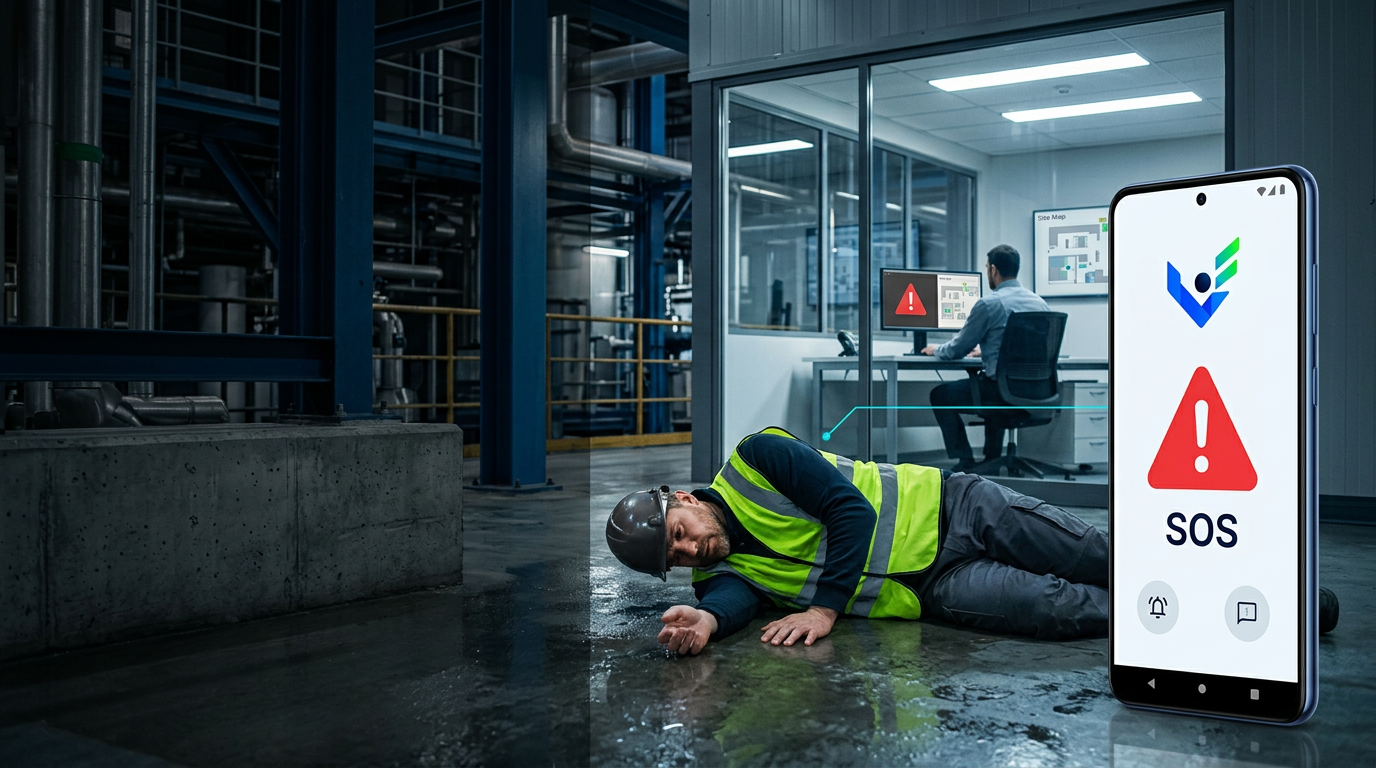
Working alone. Never overlooked.
Protection for the person working alone.
An employee’s smartphone, SOS alerts and a dispatcher panel. Connect fall and immobility detection with a response procedure — on site, in the field and during a night shift.
30-day VIMS trial · no payment card
FROM READINESS TO RESPONSE
The employee deliberately starts protection after checking phone permissions, battery and connectivity.
The app supports fall and immobility detection. The employee can also send a deliberate SOS.
The event and available location help the designated responder identify who may need assistance.
The dispatcher contacts the employee and coordinates assistance according to the company’s agreed procedure.
ONE SYSTEM. MULTIPLE SIGNALS.
Phone sensor signals support identifying situations that need attention. They do not replace risk assessment or supervision.
Employees do not have to wait for automatic detection. They can notify the people assigned to respond.
Marked points help associate a check-in with a workplace inside a building. A zone does not replace the connectivity needed to transmit an alert.
Outdoor GPS, zone labels and site plans help the dispatcher understand the location. Availability and accuracy depend on conditions.
A PERSON ON THE OTHER SIDE OF THE ALERT
The web panel supports incident handling and access to active-session information. Your organisation appoints dispatchers and emergency contacts and defines the response procedure — VIMS is not an external alarm-monitoring service.
Explore the dispatcher centreAssign someone responsible for receiving alerts.
Agree contact and emergency-response arrangements.
Check coverage and app operation on your devices.
Run a test alert and prepare a fallback procedure.
Employees start and end their own session. During an active session, location may also be collected in the background; data serves life and health protection and is available to designated people. Outside an active session, the app does not collect background location.
Location data privacy policyWHERE SOMEONE WORKS ALONE
In ATEX zones, use equipment approved for the zone. A standard smartphone does not replace a certified gas detector or equipment required by the risk assessment.
START WITH YOUR TEAM
Choose the number of devices protected concurrently. We’ll confirm terms and pricing during a consultation.
devices in active protection
Pricing on consultation
Enquire about a plandevices in active protection
Pricing on consultation
Enquire about a plandevices in active protection
Pricing on consultation
Enquire about a planScope tailored to your organisation
Pricing on consultation
Enquire about a planApply for a 30-day VIMS trial. Mention Lone Worker in your application — we’ll discuss scenarios, devices and response arrangements.
Lone Worker is a beta assistive tool, not a rescue system. Operation depends on network, battery, permissions and Android settings. It does not guarantee detection of every event or alert delivery under all conditions. In an emergency, follow the applicable procedure and call emergency services.