

Why a collection of modules is not enough
Most organisations do not suffer from a lack of tools. They suffer from having too many. The incident log lives in one spreadsheet, risk assessments in a network folder, training records with HR, safety data sheets in a binder and inspection notes in a manager's inbox. Each of them works in isolation. The trouble starts when facts have to be connected: did the person involved in the incident hold valid job-specific training, was the risk card updated after the machine upgrade, and was the corrective action raised six months ago actually completed.
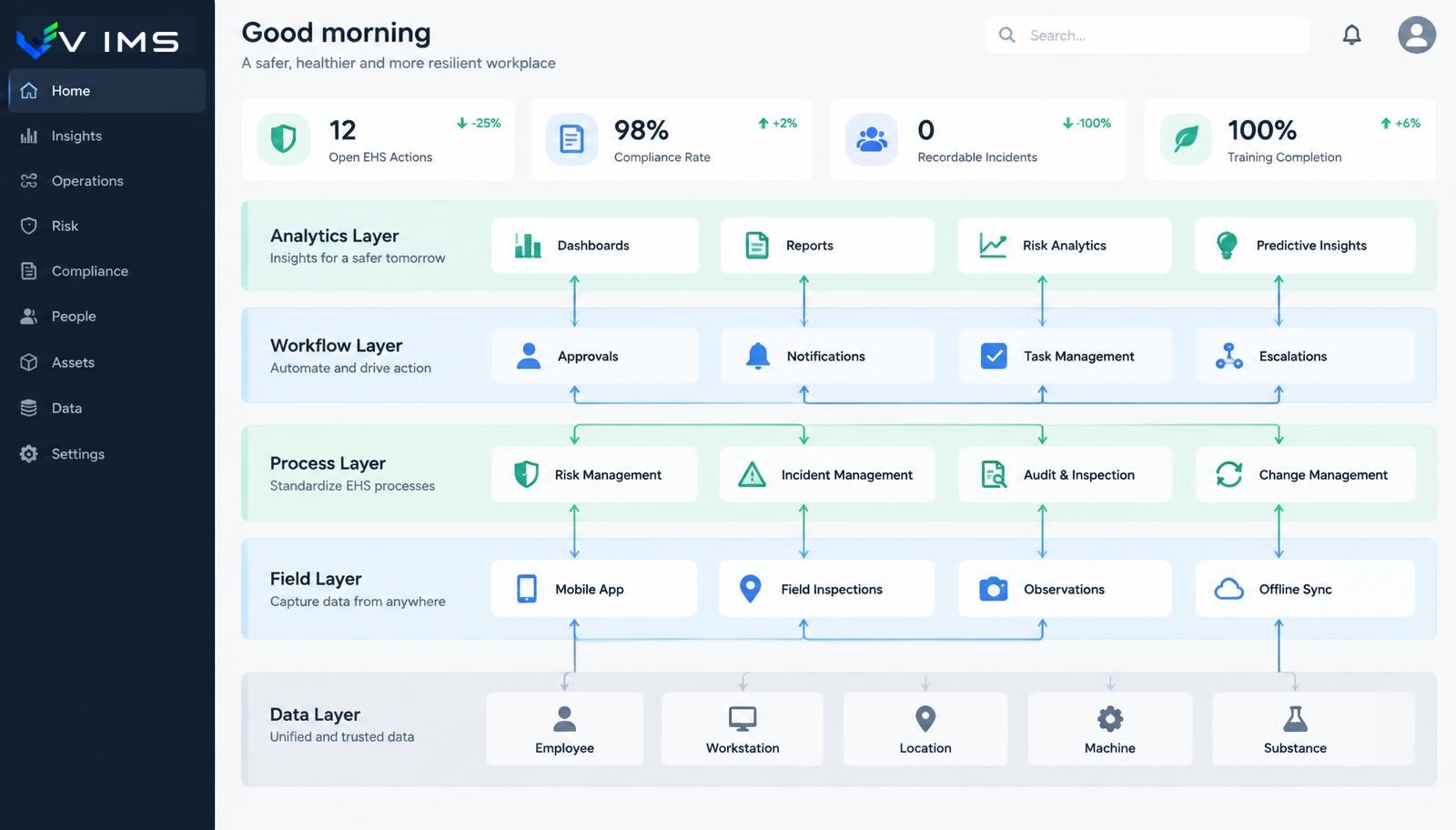
VIMS is built so that answering this does not require an investigation. The platform assumes data is entered once and reused across the system. Employee, workstation, location, machine, substance and contractor are shared objects rather than copies living their own lives in a dozen files.
The consequence is practical: a change in one place stops being a local event. Updating a job profile triggers a re-check of requirements for the people assigned to it. Logging an incident does not end with a table row; it opens the path to analysis and actions. A field inspection finding does not stay on the phone — it lands in the same action register the whole organisation uses.