

The temporary fix that stayed
The hardest case in change management is rarely technically complex. It is the workaround introduced for a single shift to keep production running: a bypassed interlock, a different hose, a substitute pump, a sensor switched off for a moment. Nobody planned for it to last, so no record was created.
A few weeks later nobody remembers the current state is improvised. The operating instruction describes the original layout, the risk assessment describes the original layout, and the plant runs differently. The next overhaul or the next change is layered on top of an unregistered modification.
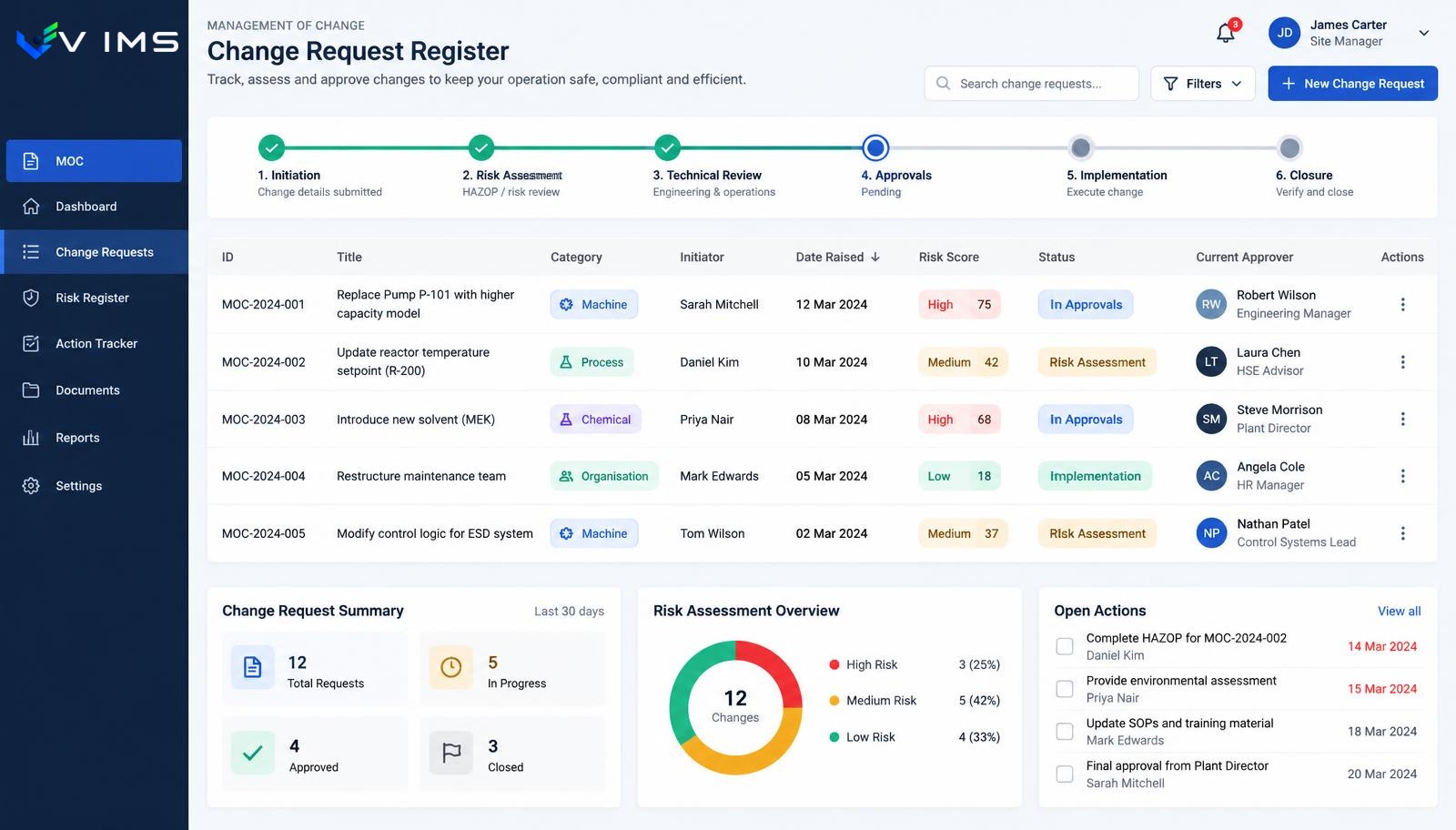
The point of MOC is precisely this: a temporary change gets an end date, an owner and conditions for returning to the target state. The register is not there to slow work down — it is there to stop a workaround quietly becoming the norm.