
VIMSVIMS

Permit to Work (PTW) for high-risk work: regulations, roles, workflow and a digital permit template

A Permit to Work (PTW) is a written authorisation, limited in time and place, to carry out higher-risk work — such as hot work, confined space entry, work at height or on pressurised systems — issued only after hazards are assessed, controls are in place and the crew has been briefed.

A guide for EHS, maintenance, facility managers and contractor coordinators: when a permit is needed, who issues and signs it, a safe 5-step workflow and how a digital PTW differs from a paper pad.

  • PTW
  • permit to work
  • high-risk work
  • hot work
  • confined spaces
  • contractors

Published: 2026-10-04 · Updated: 2026-10-04 · 13 min read · Varilo deployment team

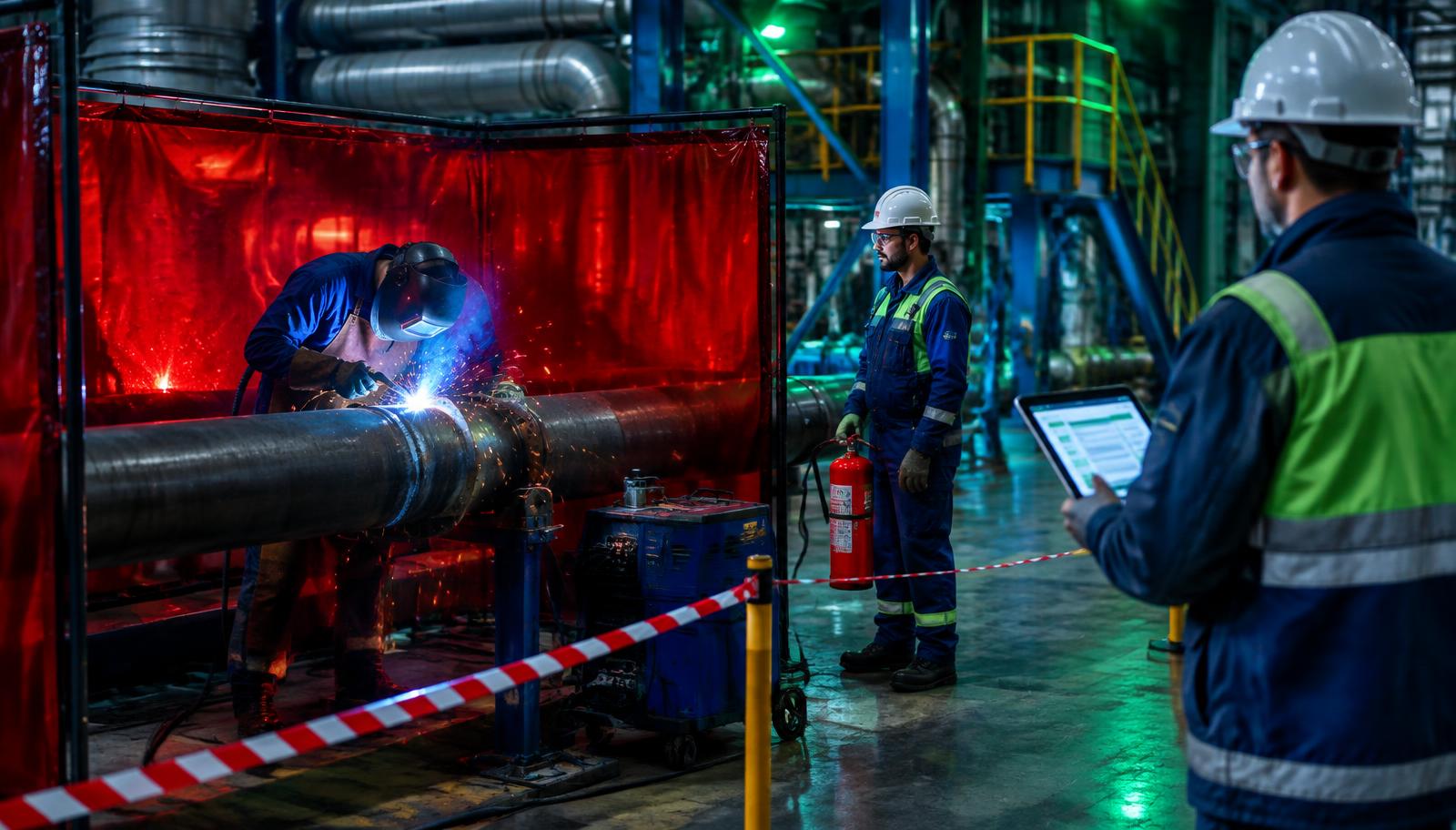
Welding on a pipeline behind a screen, fire watch with an extinguisher and a supervisor holding a digital permit to work on a tablet

Why a permit to work

High-risk work is rarely routine. It is often done by contractors, in places normally used for something else — inside a tank, above a production line, on a pipeline carrying a medium. That is when fires from welding sparks, poisoning in confined spaces and falls from height happen.

A permit forces a stop before work starts: who, where, when and what exactly, which hazards, which controls and who checked them. It turns a verbal “go ahead” into a documented decision with names.
When a permit is required — legal background

Polish general OHS regulations require employers to define particularly hazardous work on their site and the detailed requirements for it, including direct supervision, protective measures and worker instruction. Typical examples are work in tanks and confined spaces, hot work, work at height, in excavations and on energy installations.

Hot work is also covered by fire safety rules — fire hazard must be assessed, the area secured and responsible persons appointed, and in practice sites require a written permit. Where employees of several employers work in one place, Article 208 of the Labour Code requires cooperation and appointment of an OHS coordinator.

The employer sets the exact list of permit-required work based on risk assessment. This overview is for information only and is not legal advice.

Roles in the PTW process

Requester — the person who needs the work done and submits the request. Permit issuer — authorised by the employer, assesses hazards, sets conditions and signs; knows the site and installation. Performing authority (contractor lead) — accepts the conditions, briefs the crew and enforces them.

Add the standby or attendant (e.g. confined spaces), the fire watch for hot work, the EHS function and the coordinator when several companies work together. A good rule: issuer and performer are different people — nobody issues a permit to themselves.

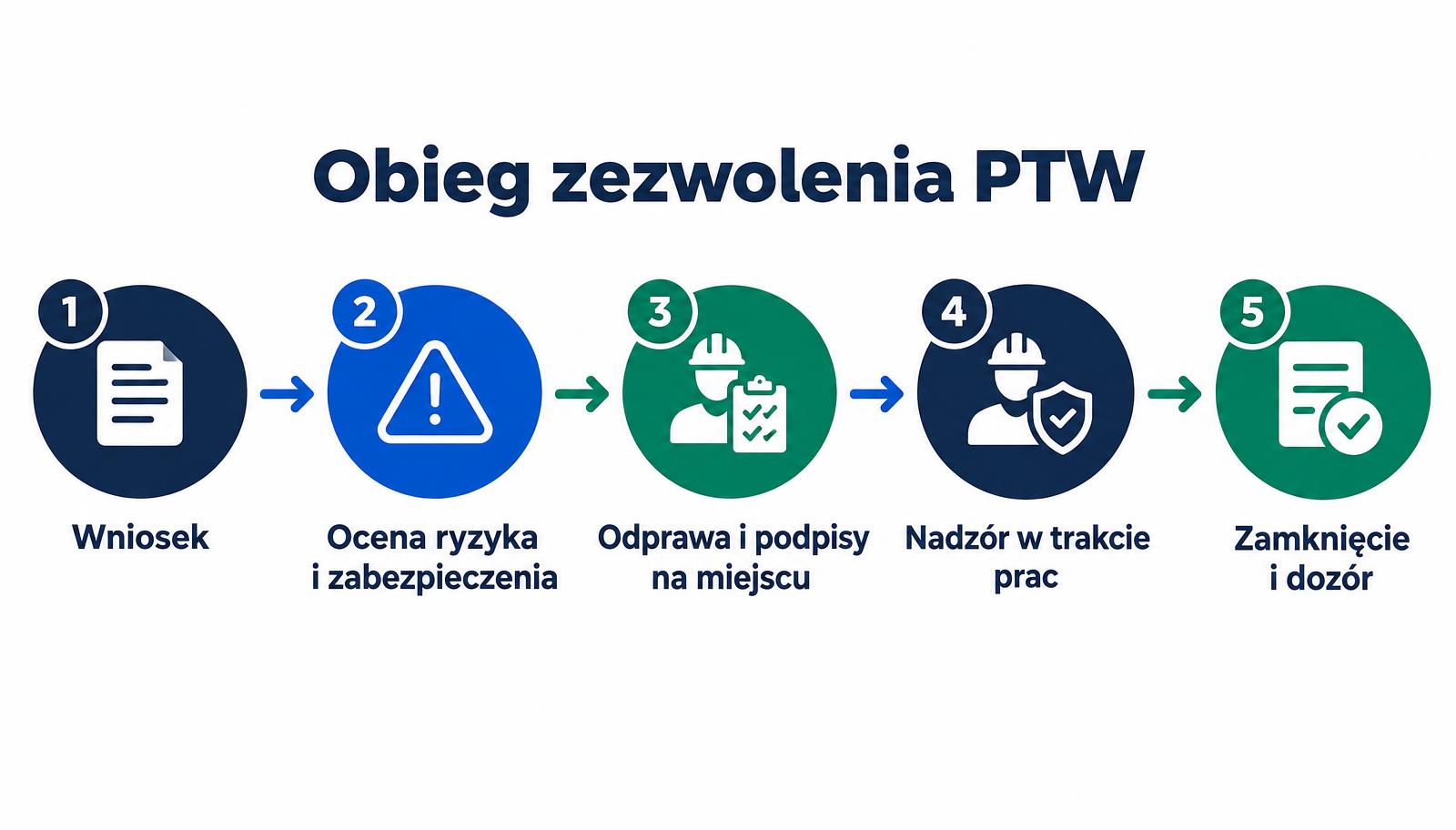
A safe permit workflow in 5 steps

1. Request — scope, location, time, contractor, crew size, equipment (e.g. welder, lift).

2. Risk assessment and controls — hazard identification, energy isolation (LOTO), removal of combustibles, gas testing, PPE, fire-fighting and rescue equipment.

3. Briefing and signatures on site — the issuer checks controls on site, the contractor confirms the conditions; the crew performs a last minute risk assessment (LMRA).

4. Supervision during work — the permit is available at the workplace and valid only for the stated period; changed conditions (gas alarm, scope change) mean work stops.

5. Close-out and fire watch — area check, locks removed, installation restored, and after hot work a fire watch for the time set in site rules. The closed permit is archived.

Permit to work flow in 5 steps: request, risk assessment, briefing and signatures, supervision, close-out and fire watch
PTW workflow (Polish labels): from request, through controls and on-site briefing, to close-out and fire watch.

What a permit should contain — hot work example

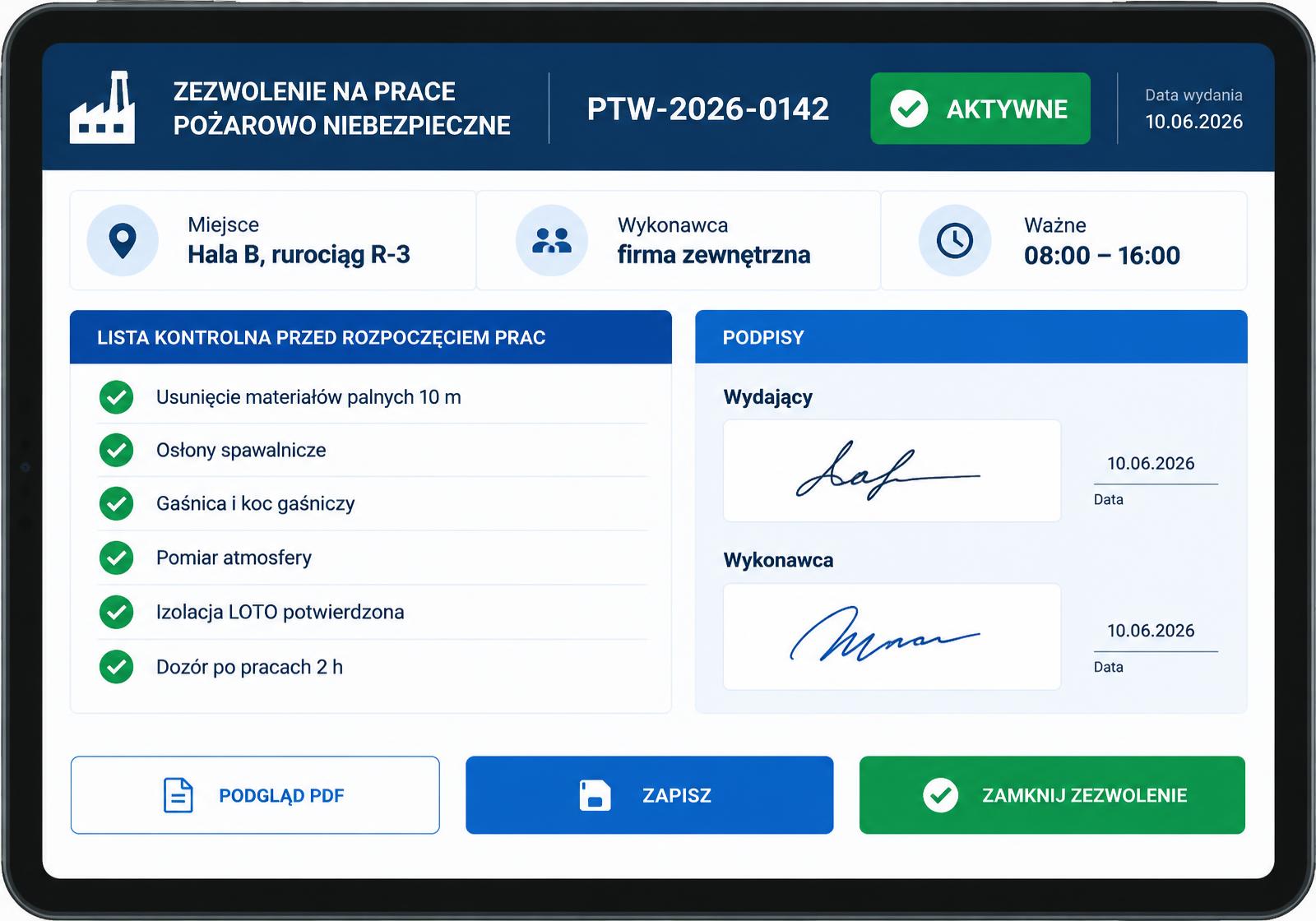
Number and status, location and scope, contractor, validity, hazards and a control checklist, required PPE, test results, a reference to energy isolation (LOTO), and issuer and contractor signatures at opening and close-out.

For hot work a typical checklist includes: removing or covering combustibles within the radius set in site rules, welding screens, extinguisher and fire blanket, gas testing where needed, isolating detectors and a fire watch after work. Values (distances, watch time) come from site rules — on the sample they are illustrative only.

Sample digital hot work permit on a tablet with a control checklist and signatures
Sample digital hot work permit (Polish labels): status, location, contractor, validity, checklist and signatures of issuer and contractor.

Common mistakes

Permits signed in the office without visiting the site. One permit “for the whole week” without re-checking at each shift. A contractor who never saw the permit because it stayed with the issuer. Operators of neighbouring plant not informed.

Skipped fire watch after hot work, expired contractor qualifications or medicals, no link to energy isolation. And an archive where a year later nobody can find who approved a given job.

How V-IMS supports permits to work

In the Permit to Work module a permit moves through request, approval, opening and close-out in one place — with signatures of responsible people, site photos and a control checklist for the work category. Work with energy isolation requires isolation to be confirmed, as described in the LOTO guide.

Contractor management shows whether an external company and its workers hold valid documents and training before a permit is issued. The crew can complete an LMRA on a phone, and any incident during the work goes straight to the incident and corrective action register.

Paper pad or digital PTW?

Both can meet requirements — the difference is how easily you keep control of many jobs at once.

CriterionPaper PTW padDigital permit in V-IMS
Availability at the workplaceSingle copy, easily lost or damagedOn phones or tablets of all authorised people
Overview of active workWalk the site or collect copiesList of active permits in one view
Contractor checksManual document checksDocument and training status visible on request
Photos and attachmentsNone or separateAttached to the permit
Archive and auditBinders, hard to searchSearch by location, company, date and person
No signal / outageAlways worksKeep a paper fallback procedure

Key takeaways

  • The employer defines permit-required work based on risk assessment.
  • Issue the permit after checking controls on site, not in the office.
  • Issuer and contractor are different people; both sign opening and close-out.
  • Changed conditions mean stopping work and reassessing.
  • Work with energy isolation links PTW with the LOTO procedure.
  • V-IMS connects permits with contractors, LMRA and the incident register.

Frequently asked questions

Is a permit to work mandatory?

Regulations require employers to define particularly hazardous work and its conditions, and for hot work — controls and responsible persons. A written permit is the most common way to meet these requirements.

Who can issue a permit?

A person authorised by the employer who knows the site and hazards — usually an area or maintenance manager or appointed employee, not the contractor.

How long is a permit valid?

As long as stated on it, usually one shift. For longer jobs conditions are re-confirmed.

How does PTW differ from LOTO?

PTW is formal authorisation for hazardous work. LOTO is technical energy isolation at a machine — often one of the permit conditions.

Can a digital permit fully replace paper?

In most cases yes, but keep a fallback procedure for no signal or system outage.

Permits, contractors and LMRA in one system

We show how a hot work permit moves from request to close-out in V-IMS — together with contractor verification.