
VIMS EHSVIMS EHS

Smartphone App or Dedicated Man-Down Device? An Honest Comparison

A man-down device is dedicated hardware worn by the worker that detects falls or no motion and sends an alarm. A lone worker app provides similar functions on the smartphone the worker already carries. The choice depends on the environment, hazardous zones, connectivity and budget — there is no single answer.

In an Ex zone an ordinary phone is out of the question. In warehouses, field work and rounds, dedicated hardware is often overkill.

  • Man-down
  • Device
  • Smartphone
  • ATEX
  • TCO

Published: 2026-10-19 · Updated: 2026-10-19 · 9 min read · Varilo deployment team

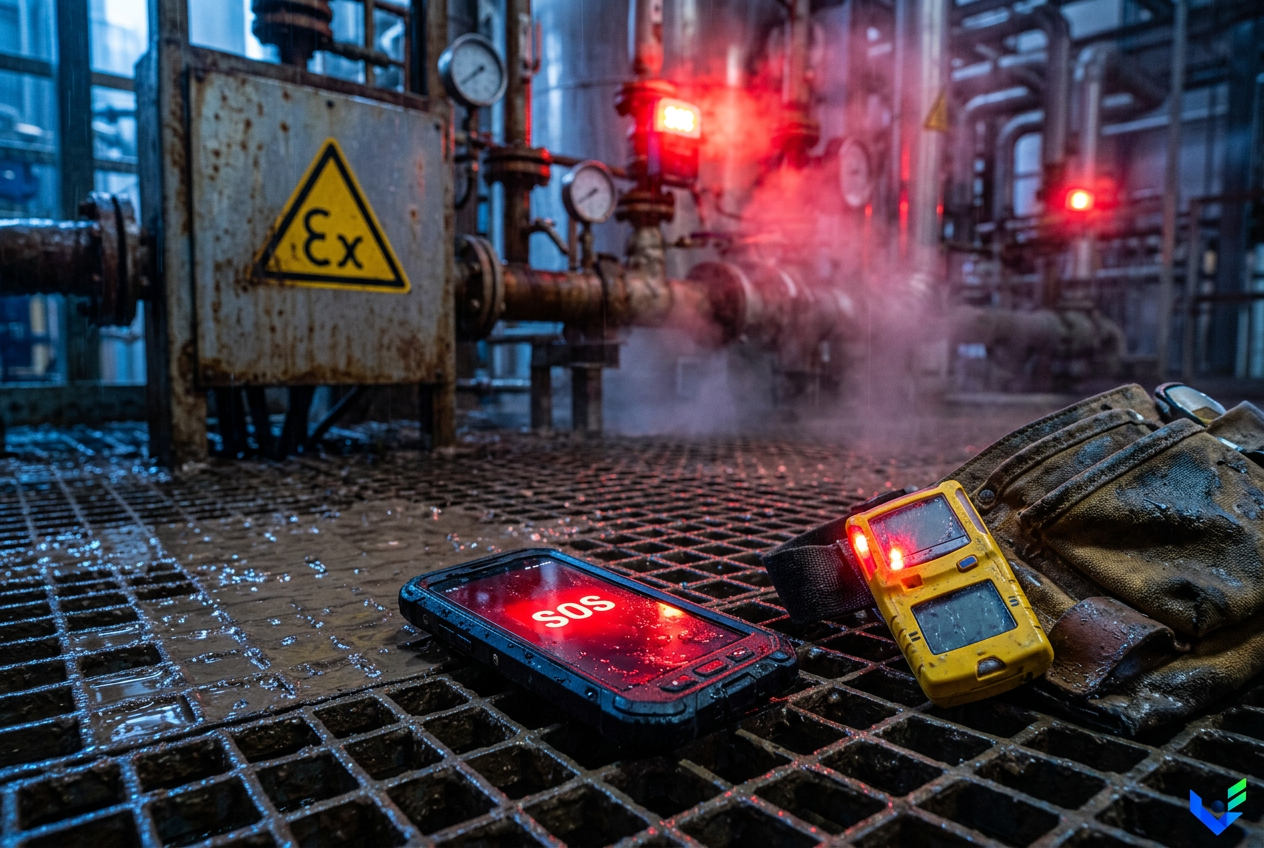
VIMS EHS — Rugged smartphone with SOS alarm and a yellow man-down device on wet grating in an area marked Ex
Rugged smartphone with SOS alarm and a yellow man-down device on wet grating in an area marked Ex

1. Where a dedicated device is a must

In explosive atmospheres (ATEX zones 0/1/2 and 20/21/22) only equipment certified for that zone may be used. An ordinary smartphone — even a rugged one — does not qualify. You need an Ex-rated phone or device.

Dedicated devices also win where there is no cellular coverage (radio, private networks), when gas measurement is needed, or when workers cannot carry phones (e.g. food production restrictions).
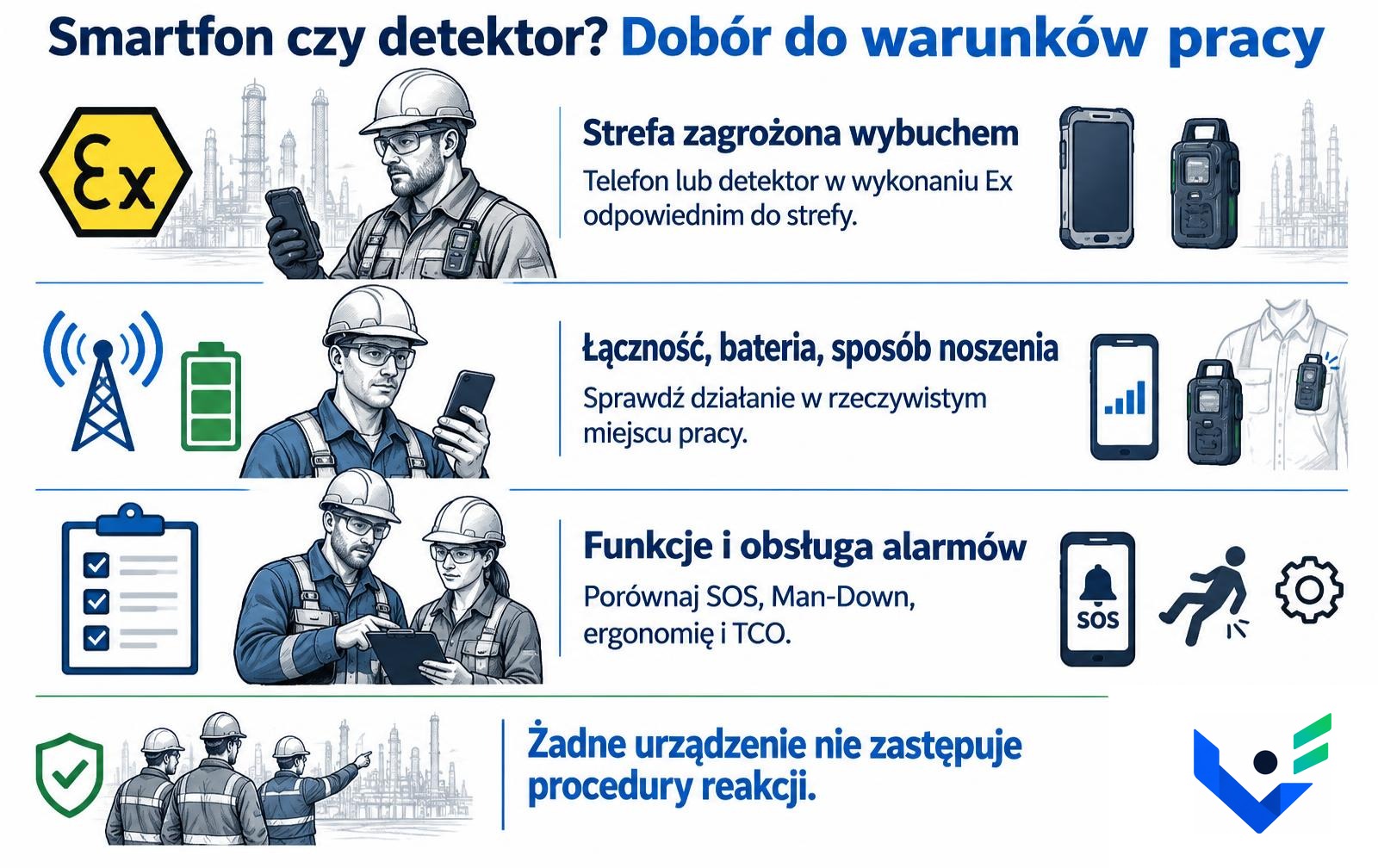
VIMS EHS infographic: choosing a smartphone or man-down device for ATEX zones, connectivity, battery, ergonomics, SOS and total cost of ownership
VIMS — illustrative Lone Worker equipment selection criteria (labels in Polish). Ex suitability must match the zone; test connectivity and alarm handling in real working conditions.

2. Where a smartphone app is enough

Rounds, warehouses, field service, security, cleaning and shift work in sites without Ex zones — workers usually already have a company phone. The app adds SOS, possible fall and no-motion detection, location on alarm and zones from QR/NFC points, without buying and servicing a second device.

Condition: the phone must be charged, connected and carried on the body. A rugged case greatly improves durability in industry.

3. Total cost of ownership, not just purchase price

For devices, count purchase, data plans, charging stations, calibration and replacements. For the app — licences and possibly phone upgrades. Add admin time: who tracks stock, issue and return of devices.

A mixed model is often best: Ex devices for hazardous zones and the app for everyone else, with one place to handle alarms and incident history.

4. The role of VIMS

VIMS Lone Worker runs on Android smartphones and connects alarms with the rest of the safety system: site plans and zones, QR/NFC points, reports and incident analysis. It does not replace certified Ex equipment — where required, we recommend the right device.

5. Glossary: man-down, SOS, no-motion detection, ATEX, TCO

Man-down (fall detection) uses accelerometer and gyroscope data to recognise a possible fall and triggers an alarm with a cancellation window. No-motion detection alarms when the device registers no movement for a set time. The SOS button (panic alarm) lets the worker call for help deliberately, including discreetly.

An ATEX-certified device is approved for explosive atmospheres under Directive 2014/34/EU — an ordinary smartphone must not enter Ex zones. Germany applies DGUV Regel 112-139 and DIN VDE V 0825-11 to personal alarm systems; the UK uses BS 8484 for lone worker services.

TCO (total cost of ownership) covers purchase, subscriptions, charging, battery replacement, servicing, training and alarm handling. A false alarm has no real hazard behind it — reducing them (cancellation time, calibration) decides whether workers actually use the system.

Smartphone app vs man-down device

CriterionSmartphone + appDedicated device
ATEX zonesOnly an Ex-rated phoneCertified versions available
Start-up costLow — phone already existsHigher — device purchase
No cellular coverageLimited operationRadio networks possible
Gas measurementNoIn selected models
Safety system integrationNative in VIMSDepends on vendor
ErgonomicsOne deviceSecond device to carry and charge

Key takeaways

  • Ex zones require certified equipment — not an ordinary smartphone.
  • Outside Ex zones, a phone app is usually cheaper and simpler.
  • Compare total cost of ownership, not just purchase price.
  • A mixed model combines the strengths of both.

Frequently asked questions

Does the app work on iPhone?

VIMS Lone Worker features are available in the Android app.

Does a phone detect falls as well as a device?

Both detect possible falls from sensors and both can produce false alarms or miss events. That is why the worker can cancel an alarm and the procedure includes confirmation.

Can devices and the app be combined?

Yes — a common model. Alarms and their history should feed one clearly defined response procedure.

What is a man-down function?

Automatic detection of a possible fall or loss of consciousness from motion sensors. After detection the worker has a short window to cancel, then the alarm goes to the named people.

Can a smartphone be used in an ATEX zone?

Only a model with the ATEX certification required for that zone. An ordinary phone is a potential ignition source and must not enter explosive atmospheres.

Which is cheaper: a device or an app?

An app on existing phones usually has a lower entry cost. A device may be necessary for ATEX, harsh conditions or where there are no company phones — compare TCO, not purchase price.

Check whether a smartphone is enough

Try VIMS Lone Worker on company Android phones — no extra hardware to buy.