
VariloVIMS

When an occupational risk assessment really needs updating

Updating an occupational risk assessment means reviewing the workplace record because conditions changed or new information about a hazard appeared. It is not a calendar activity: a periodic review is the minimum, but the real triggers are changes in technology, equipment, substances, work organisation or staffing, and any event that reveals a hazard the assessment did not cover.

The question “how often should we update the risk assessment” is almost always the wrong one. The right question is: what had to change for the existing assessment to stop describing reality.

  • Risk assessment
  • Management of change
  • Reviews

Published: 2026-01-20 · Updated: 2026-02-11 · 8 min · Varilo deployment team

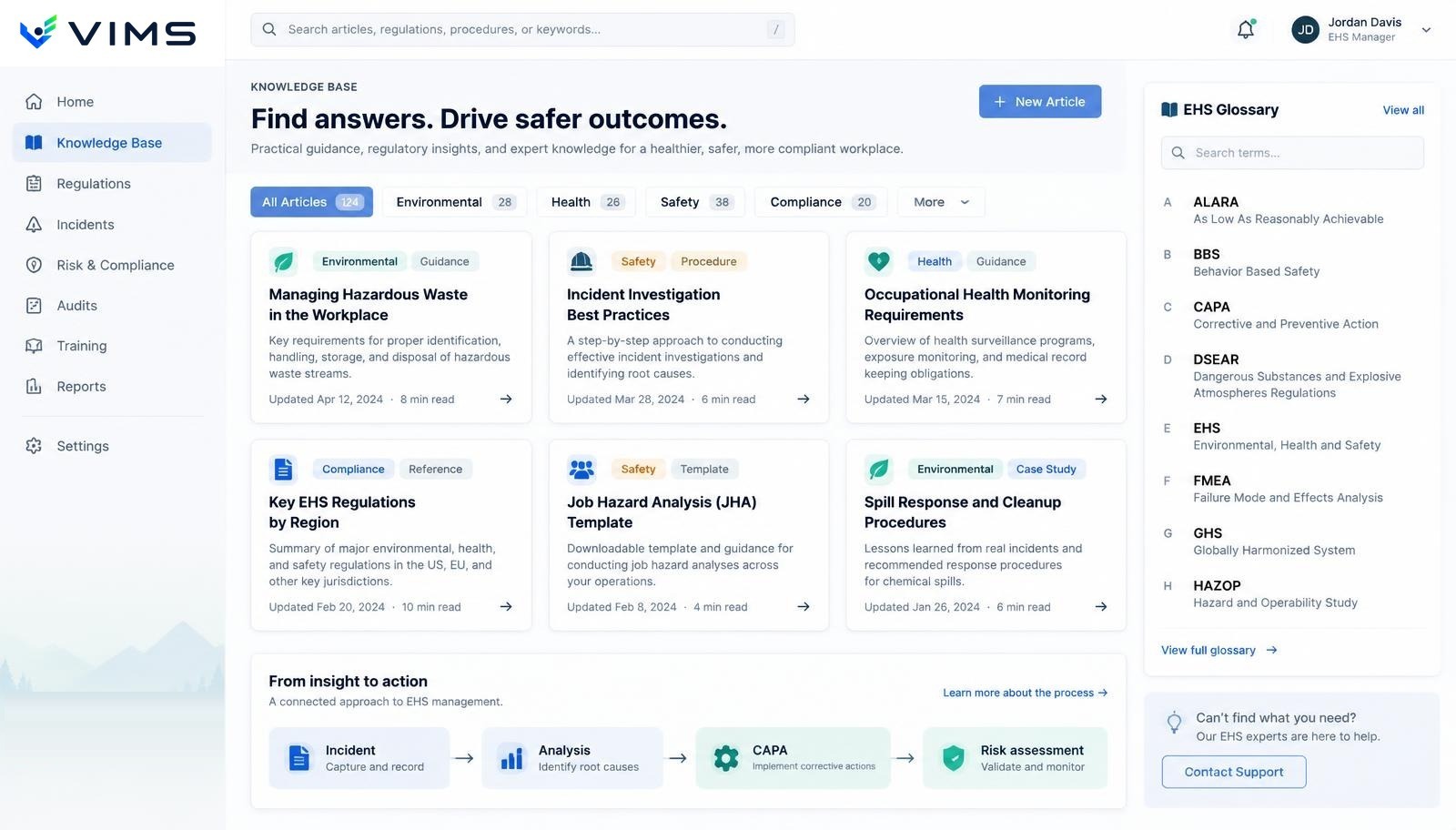
Register of occupational risk assessments with review dates in the V-IMS system

Why “once a year” is the wrong answer

A periodic review makes sense as a safety net — it catches records everybody forgot about. But when it is the only mechanism, plants regularly end up with a new press that has been running for five months while the assessment still describes a machine that is no longer there.

A risk assessment is an operational document, not an archived one. It answers the question “what threatens the person at this workstation today and how do we control it”. The schedule should therefore sit alongside a list of triggering events, not replace it.

Ten triggers that make a review mandatory

A change of technology or process: different operating parameters, a different sequence of operations, a new medium. Replacing or buying equipment — including when “it is the same machine, just newer”, because newer often means different guarding and a different cleaning routine.

Introducing a new chemical, or a change of supplier under the same trade name. A change in work organisation: night work, lone working, shorter changeovers, a different line takt. A new or modified workstation, and assigning to it a person with special status such as a young worker or a pregnant employee.

An accident, near miss or breakdown at the workstation. Measurement results showing an exceedance or a rising exposure ratio. Findings from an audit, external inspection or safety walk. A change in legal or normative requirements for the agent concerned. Repeated employee reports about the same workstation.

Scope of the review: what to actually check

A review is not changing the date on the front page. Work through four areas: the hazard list (has anything appeared or disappeared), the estimate (are likelihood and severity still true), the controls (are they implemented and are they used), and the people exposed (has the team or any special condition changed).

Check separately for controls that exist only on paper. If the record says “use the guard” but the guard comes off at every changeover, the assessment describes a wish, not a fact. That gap is the single most common audit finding.

Record the outcome even when nothing changed. A note saying “reviewed, no changes, rationale” is evidence of oversight; no entry at all looks like neglect, whether or not the review actually took place.

Linking risk assessment to management of change

The most effective organisational rule is also the simplest: no technical or process change is closed until someone answers whether it requires a risk assessment update. “No” is an acceptable answer — provided it is written down and signed.

That shifts the burden from the safety specialist's memory onto the process. Instead of reconstructing once a year what happened in the plant, you get a chain of entries tied to changes, events and measurements, each of which either triggered an update or carries the reason why none was needed.

Who should take part in the review

The minimum is the person responsible for safety, the direct supervisor of the workstation, and the employee who works there. Technical hazards bring in maintenance, chemicals bring in whoever manages substances, and harmful agents bring in someone who knows the latest measurement results.

Employee participation is not a formality. It is the only source of information about how the task is really performed on night shift, during a breakdown and under time pressure — which is exactly when events happen.

Risk assessment review checklist

  • Checked whether any trigger has occurred since the last review.
  • The hazard list was compared with the actual state of the workstation.
  • The estimate takes recent events and reports into account.
  • Controls were verified for actual use, not just for being written down.
  • Workers with special status and shift work were considered.
  • The employee who performs the task took part in the review.
  • The outcome was recorded even when nothing changed.
  • The updated record was shared with employees and acknowledgement confirmed.

Frequently asked questions

Does a near miss force a risk assessment update?

If it revealed a hazard or mechanism the record did not describe, yes. If it confirmed a hazard already covered and the controls worked as intended, a review note without content changes is enough.

Must every equipment change be reflected in the assessment?

Not every one. The criterion is the effect on how work is performed and on the safeguards. Replacing a worn part with an identical one changes nothing; changing controls, guarding, throughput or the cleaning method does.

How often should the periodic review run if nothing changes?

Annually is a sensible minimum for stable workstations, more often where harmful agents, high-risk work or heavy turnover are involved. The periodic review never replaces reacting to triggers.

What if the assessment contradicts the workplace instruction?

Resolve the contradiction in favour of the actual state and correct both documents in one review. Leaving two versions of the truth is worse than missing one of the documents.

See how the system watches the deadlines for you

In V-IMS every risk assessment carries a review date, a change history and links to the events and technical changes that triggered it.