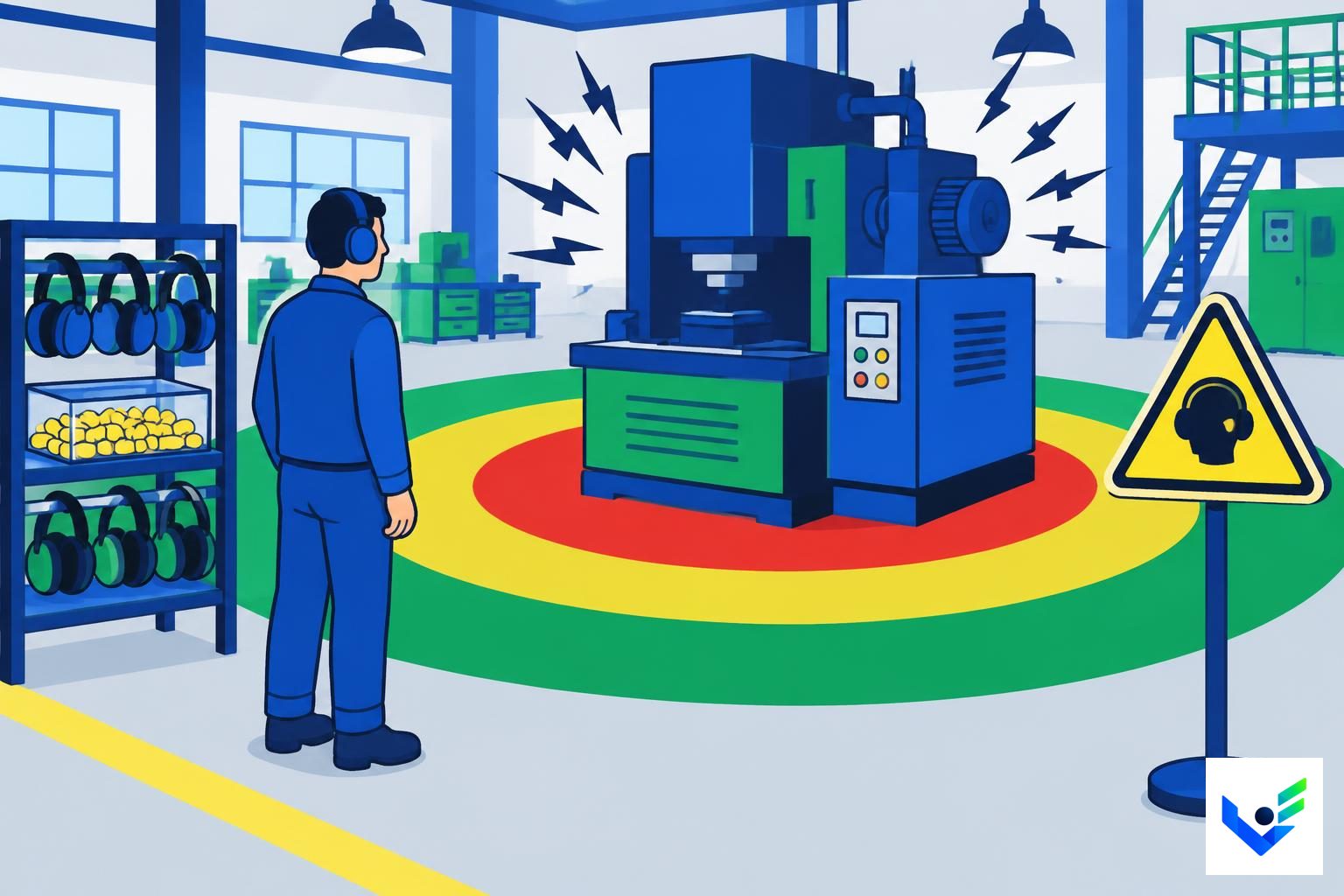
The daily noise exposure level (LEX,8h) is compared with the 80 and 85 dB(A) action values. The maximum A-weighted level (LAmax) — limit 115 dB(A) — and the C-weighted peak level (LCpeak) — 135 dB(C) lower action value, 137 dB(C) limit — are assessed alongside. For uneven weeks a weekly level (LEX,w) is used.
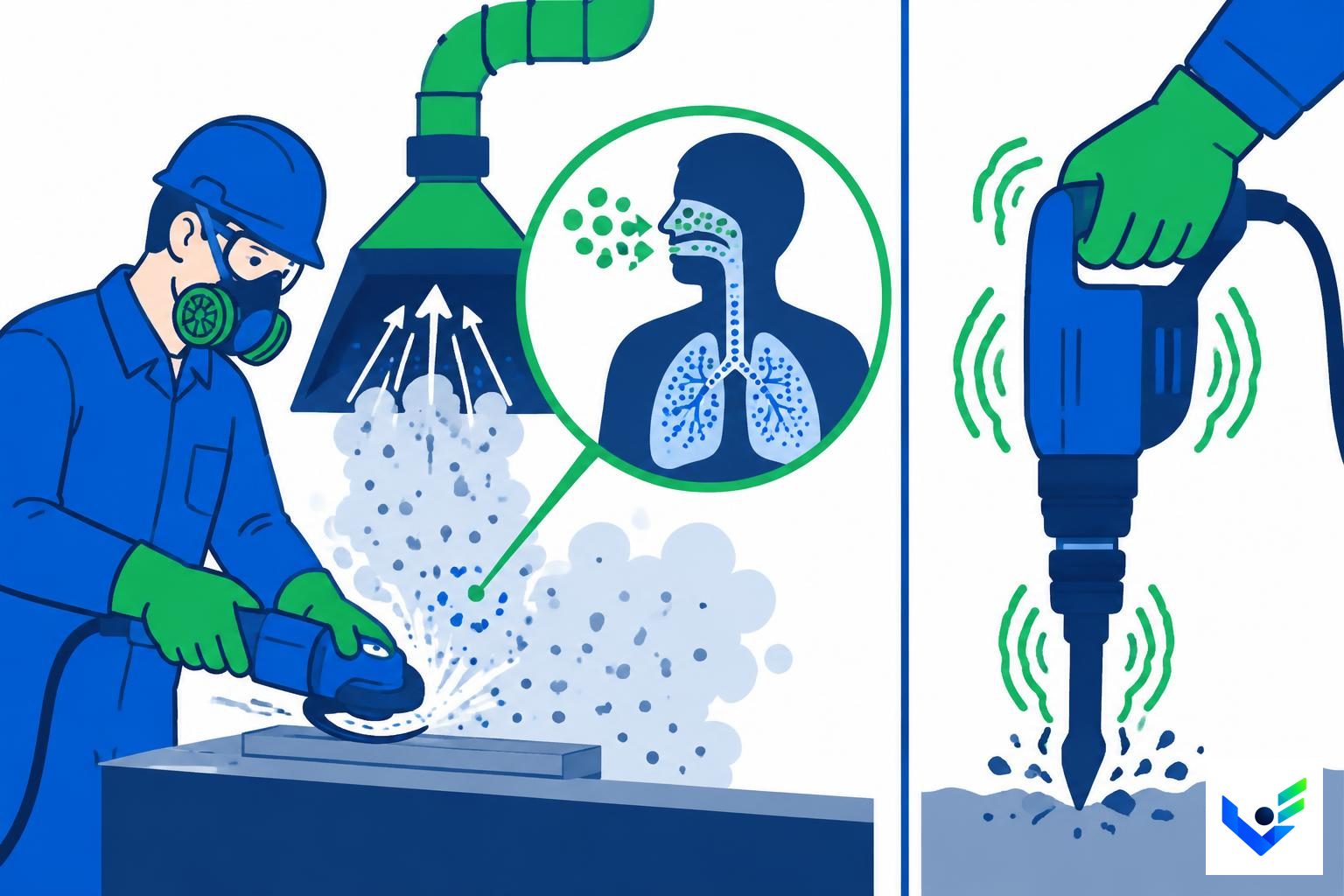
Daily vibration exposure A(8) is the RMS acceleration normalised to 8 hours. Hand-arm vibration (HAV) enters through the upper limbs and can cause hand-arm vibration syndrome; whole-body vibration (WBV) is transmitted through the seat or floor and mainly loads the spine.
Inhalable and respirable dust fractions have separate limits. Carcinogenic dusts include respirable crystalline silica (quartz, cristobalite) and hardwood dust; work exposing staff to them enters the carcinogens register and stricter measurement intervals (see the exposure measurements guide).
Filtering facepiece classes FFP1, FFP2 and FFP3 (EN 149) differ in filtration and leakage. Selection guidance under EN 529 indicatively assumes protection up to about 4, 10 and 30 times the OEL, but actual selection depends on the dust, exposure and manufacturer advice. Tight-fitting respirators should pass a fit test — a leaking mask does not deliver its rated protection.