
VIMS EHSVIMS EHS

Pallet racking inspections — EN 15635, damage classification and documentation

Warehouse racking is a load-bearing structure, not furniture — a forklift impact on an upright can reduce the capacity of an entire bay. EN 15635 defines safe racking use, including weekly visual inspections, periodic expert assessments and a three-colour damage classification: green, amber and red.

This guide explains what a load notice must show, how the colour damage classification works, who may inspect racking and how to document checks so they stand up to inspectors and insurers.

  • Racking inspections
  • EN 15635
  • Rack damage colours
  • Load notice
  • Warehouse safety

Published: 2026-10-26 · Updated: 2026-11-01 · 9 min read · Varilo deployment team

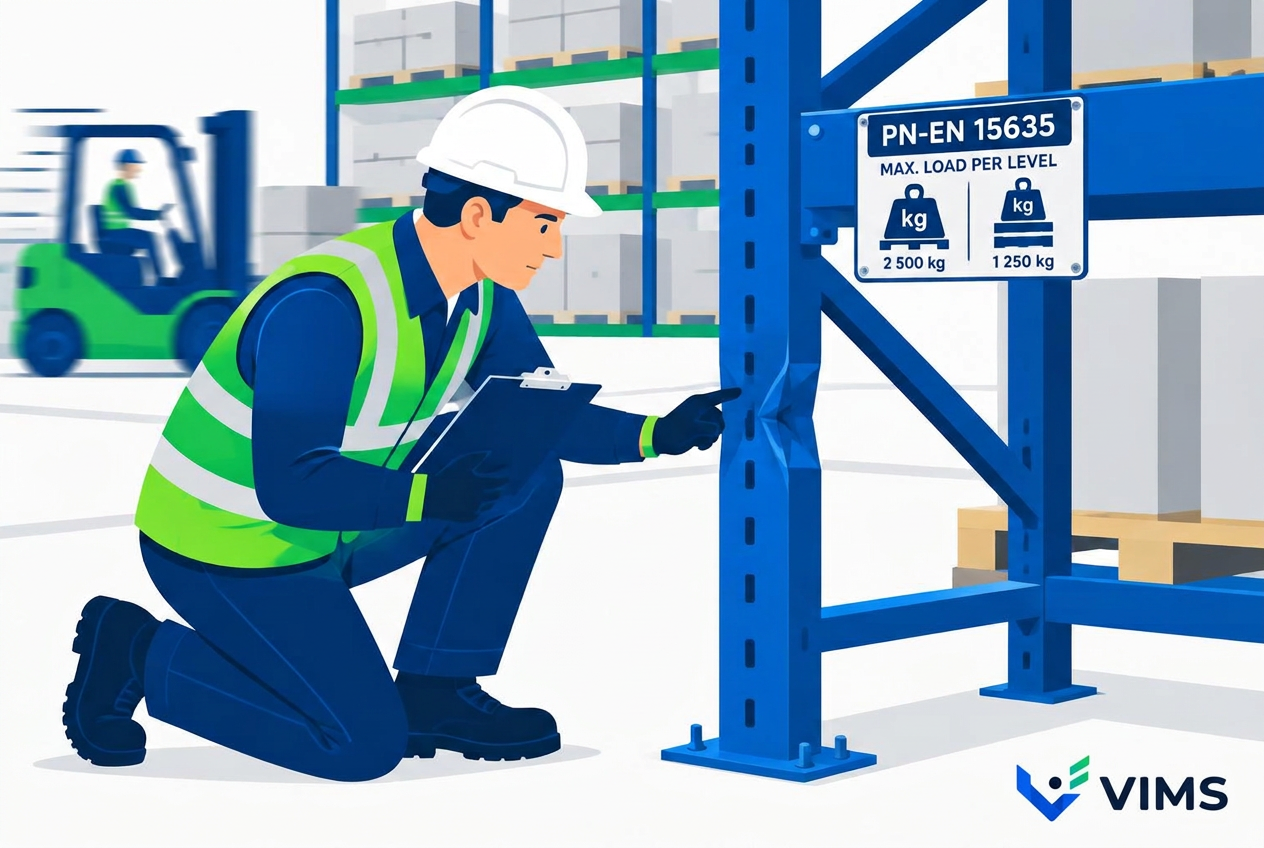
Warehouse racking inspection per EN 15635 — worker examining a dented racking upright with a load notice plate, forklift in background — VIMS EHS illustration
Warehouse racking inspection per EN 15635 — worker examining a dented racking upright with a load notice plate, forklift in background — VIMS illustration

1. Why racking needs systematic inspections

Short answer: almost every upright in a live warehouse has been hit at some point, and a dent of a few millimetres can significantly reduce load capacity. Racking gives no warning before collapse — the structure fails suddenly, usually under full load.

General OSH regulations require buildings and equipment to be kept serviceable and permissible loads to be marked. EN 15635 specifies how to do this for racking: a person responsible for racking safety (PRSES) is appointed, visual inspections are carried out and technical expert assessments commissioned. A racking collapse means injuries, destroyed stock and employer liability.
2. The load notice — what it must show

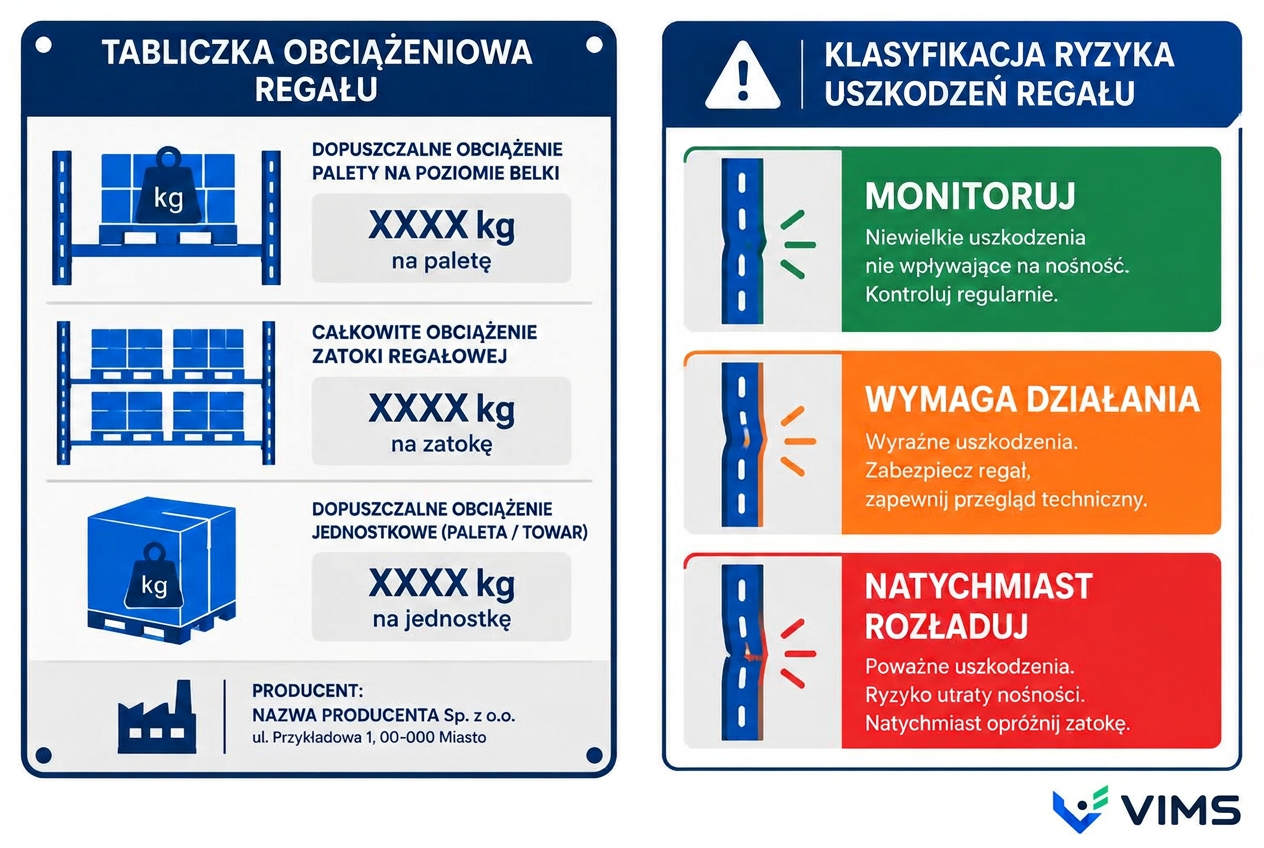
Short answer: every racking system should display a visible load notice with the permissible unit load (per pallet or item), the permissible load per beam level, the total bay load, and the manufacturer and system type. Loading racking beyond the notice values is a formal breach even if the structure looks sound.

A missing notice or illegible values is a frequent finding during inspections. If the racking has been reconfigured (beam levels changed, beams replaced), the notice values may no longer match the structure — verification by the supplier or an assessor is then needed. It is worth storing a photo of each bay's notice together with the installation documentation.

Racking load notice with permissible pallet, beam level and bay loads next to the damage risk classification: green monitor, amber action required, red offload immediately — VIMS EHS illustration
Load notice elements and the three-colour damage classification per EN 15635 (illustrative image).

3. Damage classification: green, amber, red

Short answer: EN 15635 divides damage into three risk levels. Green — damage within tolerance; the rack only needs marking and monitoring at subsequent checks. Amber — damage exceeding tolerance: offload as soon as practical, do not reload, and arrange repair or expert assessment. Red — serious damage: offload the bay immediately and take it out of service until repaired.

It is crucial that people reporting damage do not have to judge the colour themselves — a forklift operator reports the impact, and a trained person classifies it using simple measurement criteria (for example upright dent depth measured with a gauge). The boundary criteria come from the standard and the racking manufacturer's documentation.

4. How often to inspect racking and who does it

Short answer: the EN 15635 scheme has two levels. Visual inspections — weekly (or more often with heavy traffic), performed by a trained person from the site, with results recorded. Technical expert assessment — at least every 12 months, performed by an independent expert, ending with a report classifying the damage.

On top of that, damage must be reported continuously — forklift operators should have a simple way to report every impact without fear of consequences. A hidden impact surfacing at the annual assessment is the worst scenario. Extra inspections are also worth planning after layout changes, new bay installation or floor repairs.

5. Inspection records in VIMS — bay, colour, deadline

In the Registers and inspections module each racking bay has a card with its location, load notice (with photo) and inspection schedule. Weekly visual checks are ticked off on a phone checklist, and the annual expert assessment lands in the register together with the report and damage classification.

Every amber or red finding can immediately become a report in the Hazard reports module with an assigned owner and a deadline for offload or repair — the system shows which bays are awaiting action instead of losing notes by the rack. The Inspections and walkthroughs module links warehouse rounds with verification of reported defects. VIMS organises the register and deadlines — load-bearing assessment is always done by a qualified person.

6. Glossary: PRSES, expert inspection, damage risk levels and load notices

EN 15635 covers the use and maintenance of steel static storage systems; structural requirements for pallet racking are set out in EN 15512, and installation tolerances in EN 15620. The PRSES (Person Responsible for Storage Equipment Safety) is appointed by the warehouse user to organise inspections, decide on offloading and follow up repairs.

The standard distinguishes immediate/regular checks (daily or weekly observations by operators and supervisors), periodic inspections by the PRSES or a competent person at intervals set by risk assessment, and an expert inspection by a technically competent person at least once every 12 months.

Damage risk levels: green — damage within limits, to be monitored and recorded; amber — damage requiring repair; once offloaded, the location is not reloaded, and repair should follow within about 4 weeks; red — immediate offloading and isolation of the bay. Typical damage includes bent uprights, cracked base plates, missing beam locks and damaged bracing.

The load notice shows the permissible level and bay loads and the supplier details; if it is missing, do not load the location until the supplier or designer confirms capacity. Changing beam heights requires capacity to be reconfirmed. Upright protectors limit forklift impact damage — see forklift inspections and the site safety map.

Levels of racking control per EN 15635

A scheme combining daily reports, weekly inspections and annual expert assessments.

Control levelWhoWhenDocumentation
Damage reportany employee, especially forklift operatorsimmediately after an impact or discoveryreport with photo and bay location
Visual inspectiontrained site person (under PRSES supervision)weeklyentry in the inspection register
Expert assessmentindependent expert / assessorat least every 12 monthsreport with damage classification and recommendations

Key takeaways

  • The load notice with limits per pallet, level and bay must be visible and match the actual structure.
  • The green/amber/red classification says what to do with damage: monitor, plan offload or empty the bay immediately.
  • Weekly visual checks are done by a trained site person; the annual assessment — by an independent expert.
  • A culture of reporting every impact matters more than the checklist itself — hidden damage is the greatest risk.

Frequently asked questions

How often should warehouse racking be inspected?

Visual inspections are carried out weekly (more often with heavy traffic), and a technical expert assessment at least every 12 months. Every forklift impact should also be reported and assessed immediately.

What does amber racking damage mean?

Damage exceeding the standard's tolerance — offload as soon as practical, do not reload, and arrange repair or expert assessment.

Who can perform a racking expert assessment?

An independent expert or assessor familiar with EN 15635 — not the person responsible for daily warehouse operation, so the evaluation stays impartial.

What is a PRSES?

Person Responsible for Storage Equipment Safety — the person appointed on site to oversee racking safety: keeps the inspection register, orders repairs and prepares expert assessments.

Can dented racking uprights be repaired?

Straightening or welding racking components on your own is forbidden. Damaged uprights and beams are replaced with original manufacturer parts; repairs are allowed only per the manufacturer's procedure.

Who is the PRSES?

The Person Responsible for Storage Equipment Safety under EN 15635, appointed by the warehouse user. They organise inspections, keep the records and decide when damaged locations must be offloaded.

What if the racking load notice is missing?

Do not load the location until the racking supplier or designer confirms permissible loads, then fit a new notice. The same applies after changing beam heights.

How long is there to repair amber damage?

Common practice under EN 15635 is about 4 weeks. Once offloaded, the location must not be reloaded before repair; red damage requires immediate offloading.

Racking records without notes by the bay

See how VIMS keeps the racking register, inspection schedules and damage reports with photos — from the weekly check to the annual expert assessment.