UDT examinations of lift trucks in Poland are: the acceptance examination before a decision permitting operation, periodic examinations at intervals set by the regulation on technical supervision for the applicable form of supervision (full, limited, simplified), ad hoc examinations (e.g. after an accident, modification or on request) and post-failure examinations. Intervals depend on the truck type — check them in the decision and the inspection logbook.
A certified maintainer holds a qualification certificate for truck maintenance, performs periodic maintenance at intervals set by the regulations and the manufacturer, and records it in the maintenance log. A certified operator drives the truck; the most common Polish categories are II WJO (lift trucks excluding specialised ones) and I WJO (all, including specialised trucks such as telescopic or with an elevating operator position). Replacing LPG cylinders requires a separate certificate.
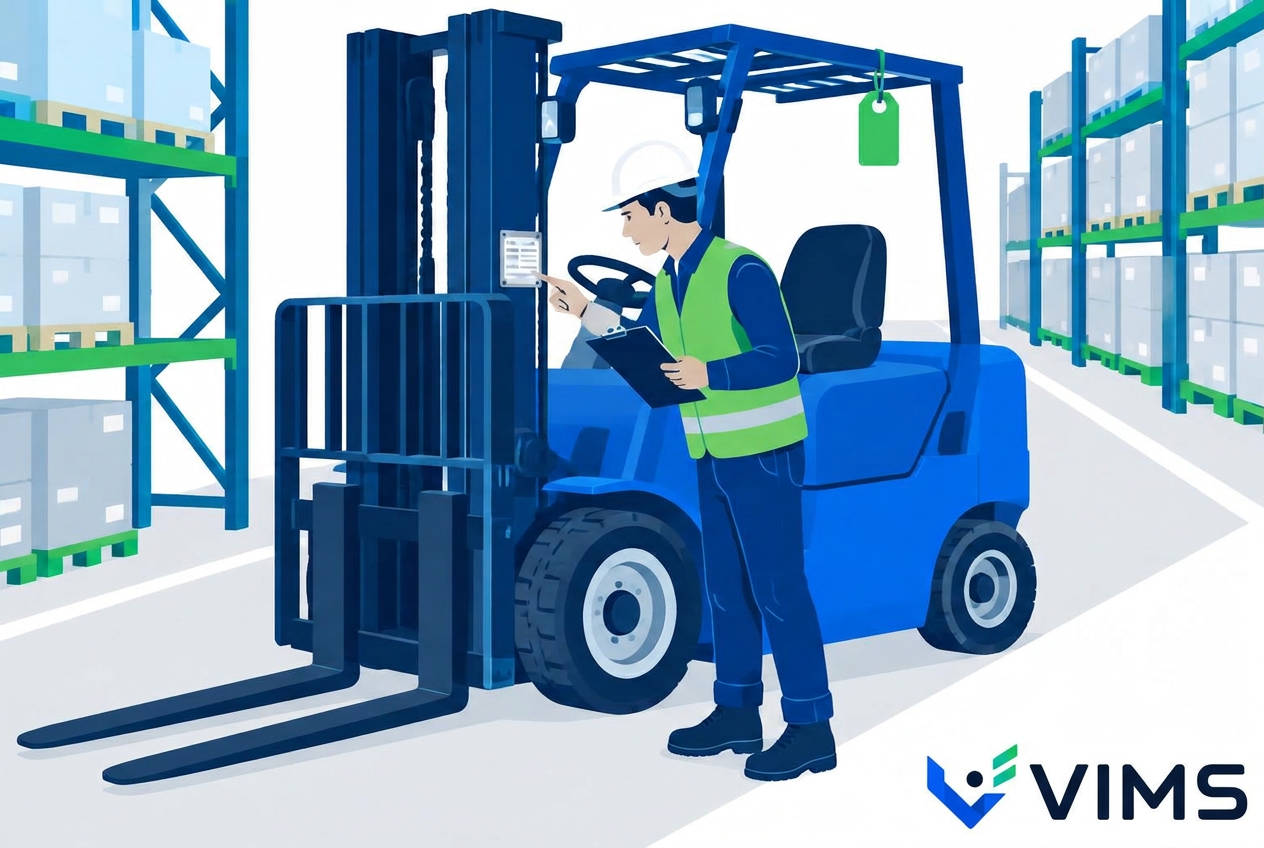
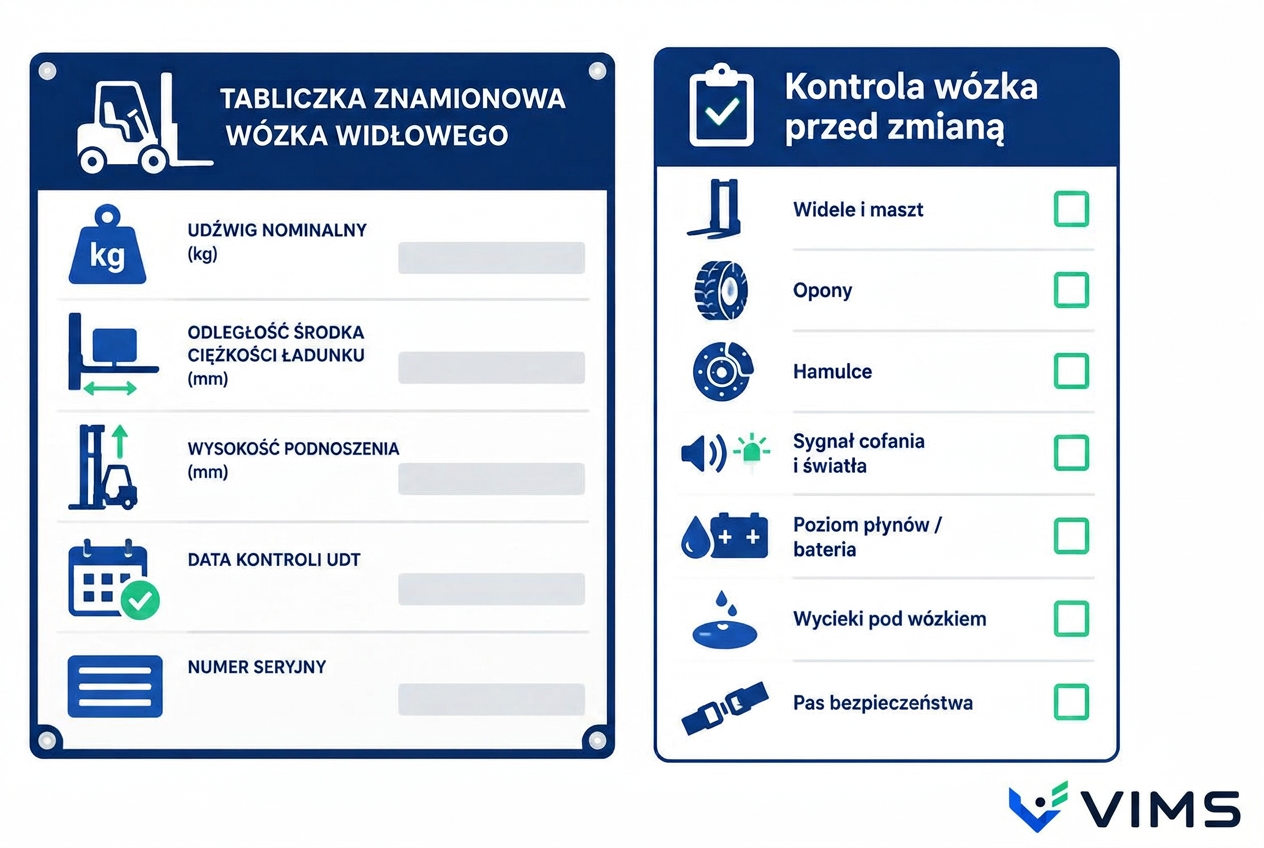
The pre-shift check is the operator's duty — it does not replace maintenance or UDT examinations. Fork wear is assessed under ISO 5057: forks are withdrawn when blade thickness has worn by 10% of the original, when cracks or deformation appear, or when the height difference between fork tips exceeds the permitted value. The capacity plate and load chart define capacity for a specific mast and attachment configuration.
Site traffic management covers transport routes, pedestrian crossings, mirrors, speed limits and battery charging areas — it is worth showing on the site safety map. Forklift impacts are the most common cause of racking damage — see pallet racking inspections.